
How to plan a solar and battery system for your South African property
The strongest solar conversation starts with the loads and the site—not a favourite brand or a bundle advertised online.
Solar PV, inverters and battery storage can improve resilience and reduce dependence on grid electricity, but useful performance depends on how well the system matches the property. A careful plan distinguishes three different goals: keeping essential loads running during outages, reducing purchased electricity over time, and creating room for future expansion.
1. Start with the outcome
Ask what success means before discussing equipment. A household that wants lights, internet and refrigeration during an outage has a different brief from a business that must keep point-of-sale equipment, security, computers or production loads available. The desired backup duration matters too.
Write down the priority loads and divide them into essential, desirable and non-essential groups. This makes trade-offs visible when budget, inverter capacity or battery autonomy is limited.
2. Build a realistic load picture
A site assessment may use electricity bills, appliance ratings, operating schedules and measured demand. Average monthly consumption is useful for energy planning, but it does not describe every instantaneous peak. Motors, pumps, compressors and some appliances can draw higher power when starting.
- List appliances or circuits that must remain available.
- Record approximate running power and hours of use.
- Identify high-demand equipment and starting loads.
- Separate daytime consumption from evening or overnight demand.
- Note future additions such as air conditioning, pumps or an electric vehicle.
A battery is normally discussed in energy terms, while an inverter is also constrained by power. Both the duration and the simultaneous load matter.
3. Understand the site
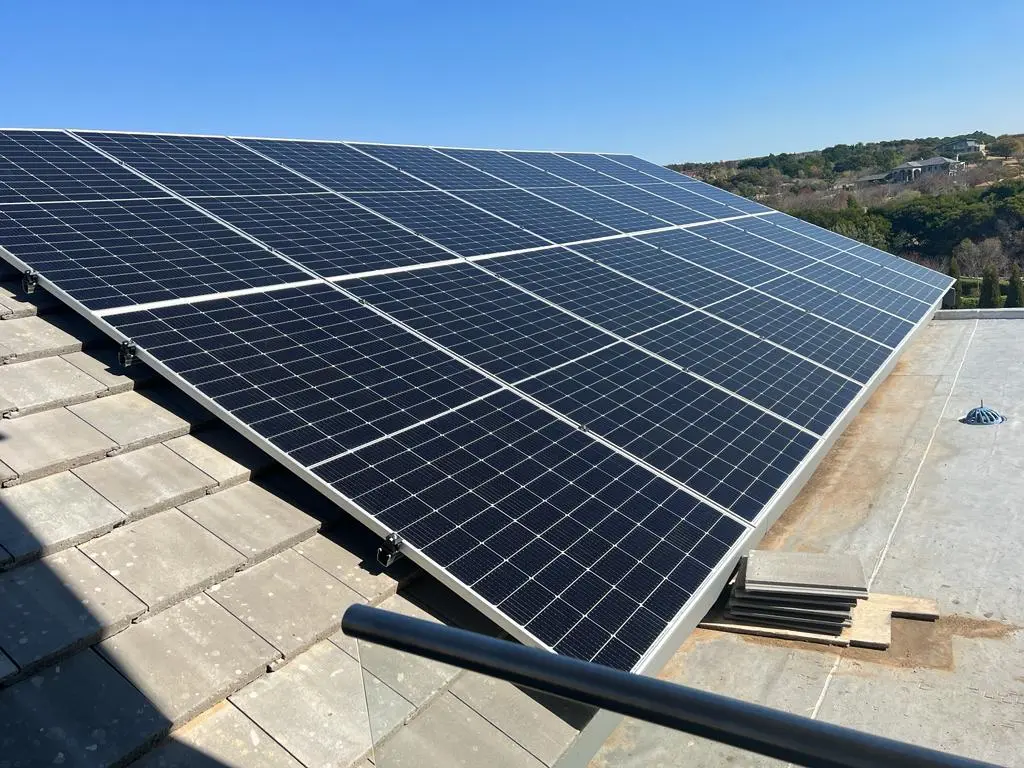
Solar panels need suitable space, orientation, structural support and limited shading. Cable routes, inverter location, battery environment, ventilation, service access and distance to electrical boards also shape the installation. A neat photograph cannot show every condition that determines compliance or performance.
Existing electrical infrastructure should be reviewed. The condition and arrangement of distribution boards, earthing, protection, available circuits and labelling may influence the work required before a solar or backup system can be integrated responsibly.
4. Decide what the battery must do
Battery sizing should follow the essential energy requirement and desired autonomy. Depth of discharge, efficiency, operating temperature, warranty terms and the inverter’s compatible voltage or communication requirements can all affect the usable result.
It is often more valuable to define the required outcome—such as “keep these circuits operating through a typical evening outage”—than to request a battery solely by advertised capacity.
5. Consider system architecture and future growth
Ask whether the system is intended mainly for backup, solar self-consumption or a staged path to a larger installation. Confirm which loads will be connected, whether the design permits later panel or battery additions, and what constraints would apply.
Equipment should be selected as a compatible system. Inverter, battery, panels, protection, monitoring and electrical integration need to work together, not simply look attractive in isolation.
6. Make the quotation comparable
A useful quotation should make scope visible. Compare component models and quantities, installation work, electrical alterations, containment, protection, monitoring, testing, commissioning, warranties, exclusions and any certification or inspection requirements explicitly stated.
- What assumptions were used for loads and autonomy?
- Which circuits or equipment are included?
- What site preparation or electrical remedial work is excluded?
- Who is responsible for required approvals, inspection or certification?
- What happens if site conditions differ from the initial information?
- What user training and after-sales support are included?
7. Plan for safe operation and maintenance
Clients should understand normal operation, isolation, monitoring, warning conditions and when to call for technical support. Keep manuals, settings, warranties and handover records available. Periodic checks may include physical condition, cleanliness, alerts, connections and performance trends as recommended for the installed equipment.
This article is general planning information, not an electrical design or safety instruction. System selection and regulated electrical work should be assessed and completed by appropriately qualified persons in accordance with applicable requirements.
Your solar enquiry checklist
- Property type and town or area
- Recent electricity-use information where available
- Essential appliances or circuits
- Desired backup duration
- Photographs of roof areas, meter and distribution boards
- Existing inverter, generator or solar equipment
- Preferred timing and budget context
Discuss your energy requirement with Mazwi.
Bring the load priorities and site information available. The team can help identify the next assessment step.